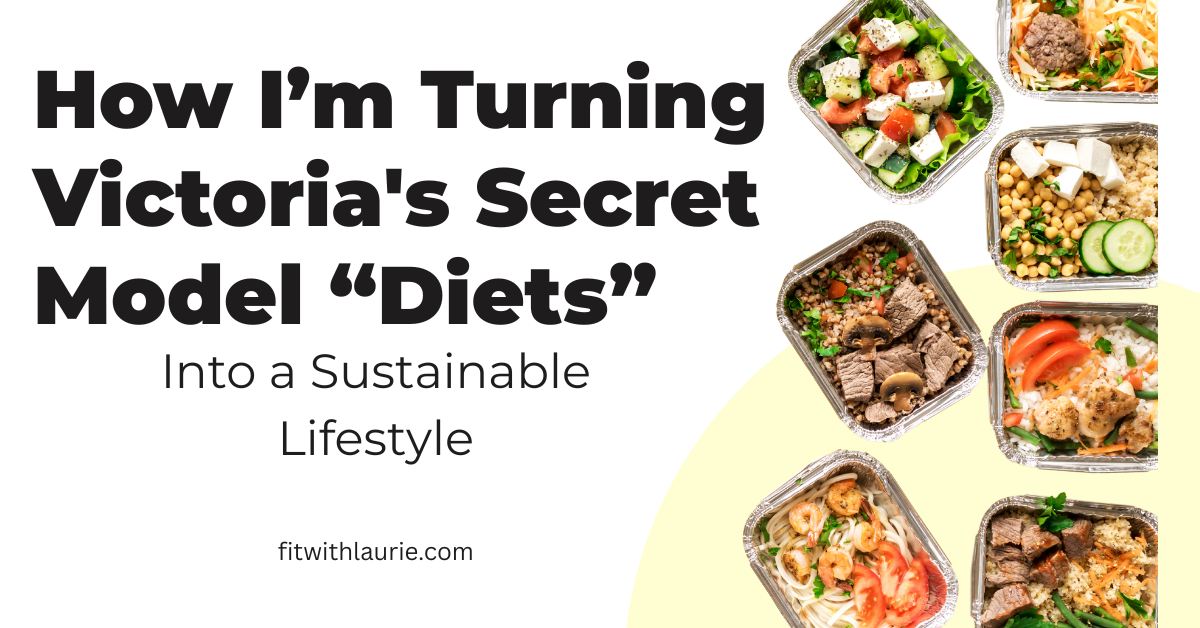
How I’m the Turning Victoria Secret Model “Diet” Into a Sustainable Lifestyle
We’ve all seen the headlines: “How Victoria’s Secret Models Eat Before the Fashion Show” or “The Diet That Gets Runway-Ready Bodies.” And if you’re like me, you’ve probably clicked on those articles hoping for some magic formula.
These meal plans have long been criticized for being too low in calories and unsustainable in the long run. I’ve been adapting their principles into something sustainable for real life. Here’s what I’ve learned and how I’m making it work without a private chef or nutritionist on speed dial. (PS – if you want to learn how Victoria’s Secret models workout, check out my post here).
The VS Model “Diet”
When I first started researching, I assumed most models follow the same rigid meal plan. I learned this is far from what the Victoria’s Secret models follow. Each model actually has her own version, but most do follow low-calorie, nutrient-dense eating. It’s been reported that some models eat as few as 1,300 calories per day. Some models also follow variations of intermittent fasting. While the individual plans vary, almost all Victoria’s Secret models follow the same structure in their meal plans: focusing on fruits, vegetables, health fats, and a good source of protein with each meal, while avoiding or restricting refined carbs, processed foods, and added sugars.
According to Healthline.com, a general guideline of foods to eat and foods to avoid are as follows:
Foods to Eat:
- Vegetables: broccoli, cauliflower, tomatoes, asparagus, squash, carrots
- Fruit: berries, apples, oranges, peaches, pears, plums
- Proteins: poultry, seafood, lean cuts of meat, eggs
- Whole grains: quinoa, brown rice, oats, couscous
- Nuts: walnuts, almonds, pistachios, cashews, macadamia nuts
- Seeds: chia seeds, pumpkin seeds, hemp seeds, flax seeds
- Legumes: chickpeas, beans, lentils
- Healthy fats: coconut oil, olive oil, avocados
Foods to Limit/Avoid:
- Processed foods: chips, cookies, pretzels, fast food, baked goods, candies
- Refined grains: white varieties of pasta, bread, rice, and tortillas
- Sugar: table sugar, brown sugar, maple syrup, honey
- Alcohol: wine, beer, cocktails, spirits
- Starchy vegetables: sweet potatoes, potatoes, corn, peas
- High sugar fruits: pineapple, bananas, mangoes, grapes
Criticisms of the Victoria’s Secret Diet
This type of eating has been heavily criticized for many reasons. Individual nutrition needs vary by height, weight, age, and activity level, making the 1,300 calorie diet likely much too low for most people over long periods of time. Dietician Abbey’s Kitchen blog states that most models are underweight on the BMI charge, and calls the lifestyle “extreme, toxic, and unhealthy.”
How I’m Adapting This for Real Life
Disclaimer: I am not a dietician – this is simply a diary of what I’m eating and should not be taken as what someone else should eat. Every person has different nutrition needs that should be taken into account when creating a meal plan.
While the Victoria’s Secret model “diet” is likely not sustainable long term, there are many aspects of it that I like such as focusing on whole foods, limiting processed foods, and prioritizing lean protein with each meal. I wanted a way to take this concept and turn it into an achievable and healthy lifestyle that will get me looking and feeling my best.
What I’m Doing
I used Healthline’s macro tracking formula to calculate my calorie and macro needs for my fitness goals. I then track my calories and macros using a free app such as MyFitnessPal.
Once I had my calorie and macro needs, I built my meals with these goals in mind. Each meal focuses on a lean source of protein (chicken, lean beef, salmon, eggs, etc.), and ensure each meal has at least one vegetable. I also limited both processed foods and alcohol, and following the 80/20 rule for eating (following this plan 80% of the time and allowing myself processed foods 20% of the time).
Here is a breakdown of a sample day’s meals:
- Breakfast: egg whites with spinach and bell peppers
- Lunch: lean ground beef protein bowl with spinach, bell peppers, carrots, cheese, and almonds
- Dinner: grilled chicken with green beans
- Snacks/Desert: Greek yogurt with granola or chocolate chips, a piece of fruit
What I’m NOT Doing
I’m not cutting entire food groups because each (carbs, fats, and proteins) serves a purpose.
I’m not weighing myself daily. I check in weekly and focus more on how I feel, how my clothes fit, and my performance in workouts..
I’m not spending $300/week on groceries. I shop smart, buy in bulk, and prioritize affordable staples like eggs, frozen chicken, frozen vegetables, and oats.
Conclusion
Victoria’s Secret models don’t have a secret diet. They have access to professionals who help them fuel their bodies strategically for their specific goals. But the core principles—prioritizing protein, eating plenty of vegetables, staying hydrated, and being consistent—are accessible to anyone.
You don’t need a nutritionist on speed dial or a grocery budget that rivals a car payment. You need a plan that works for your life, your schedule, and your goals. I’m setting out to prove that you can eat like a model without the model budget or the model pressure. And I’m sharing every step of the process so you can follow along.
If you want to see how I’m training to match this nutrition approach, check out my post on The Victoria’s Secret Model Workout: What Actually Works.
Let’s build sustainable, healthy habits together—no extremes required. Check out my progress and on TikTok @fitwithlaurie.
— Laurie